Blog & News
Subtitle Goes Here
Lorem ipsum dolor sit amet, consectetur adipiscing elit, sed do eiusmod tempor incididunt ut labore et dolore magna aliqua. Ut enim ad minim veniam.

The 2026/27 Effective Impact Mentoring Program Cohort has been solidified. Our Effective Impact Mentoring Program is a transformational, year-long experience that provides individual guidance and professional skills to help mid-level women achieve their career goals. Since its launch in 1997, over 240 women have benefited from the program.

For years, progress toward greater gender diversity in corporate boardrooms seemed to be accelerating. Today, the landscape is shifting. Recent Bloomberg reporting found that white men have received approximately 60% of new S&P 500 board appointments in 2026 (the highest share in a decade) while women have received about one-quarter of new board seats, down from one-third the previous year. Companies cite economic uncertainty, AI, geopolitical risk, and a desire for experienced leaders as reasons for narrowing their searches. At Executive Alliance, we don't see this as a reason to step back. We see it as a reason to become even more intentional. Board opportunities have always been competitive. The women who earn them are rarely the ones who decide to pursue board service after an opening is announced. They're the leaders who have spent years building the experience, relationships, and visibility that position them for success. Board Service Requires a Different Kind of Leadership
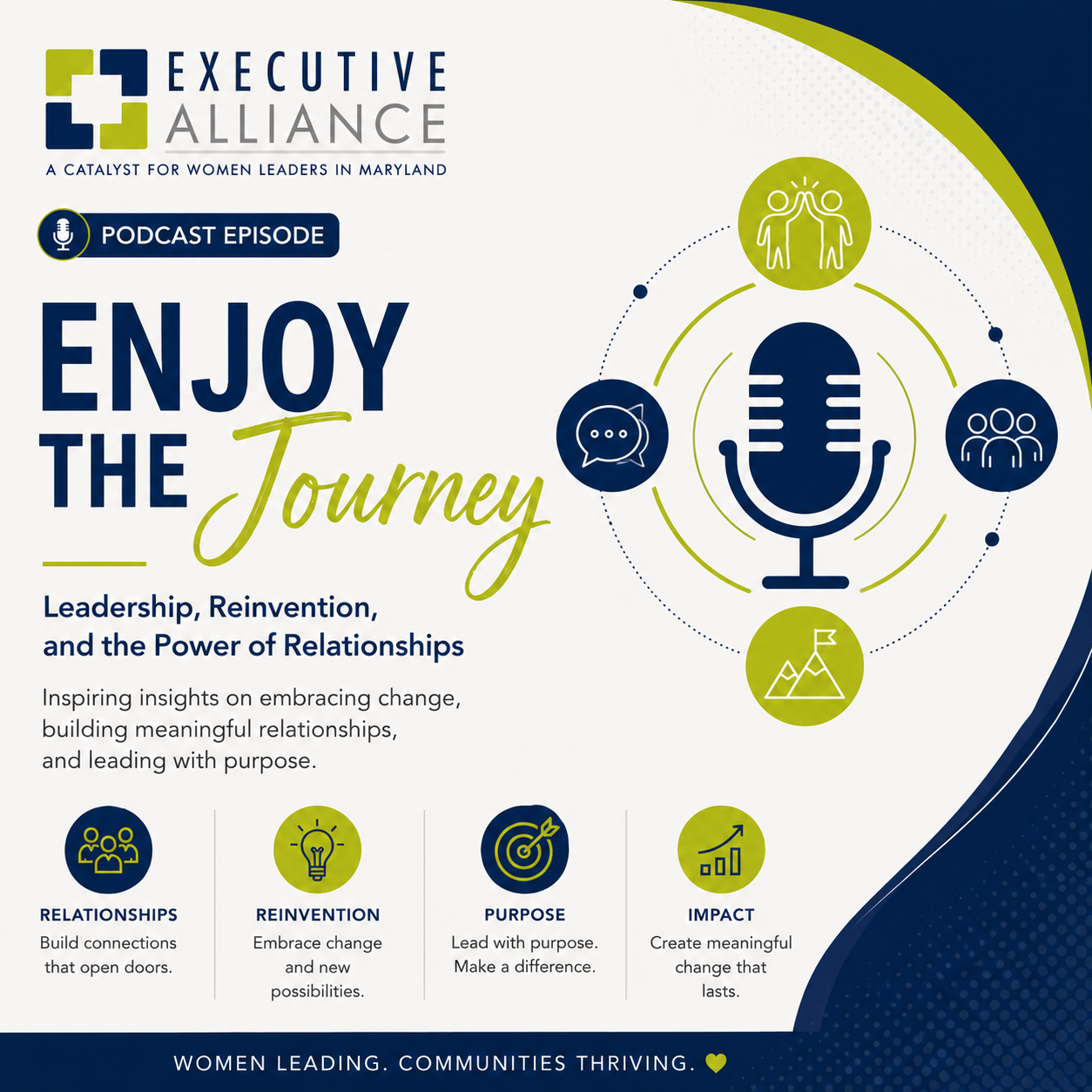
Leadership isn't always a straight path. Discover how Stephanie Bagley built a successful consulting firm through relationships, reinvention, lifelong learning, and the courage to embrace opportunity.

General elections can always bring surprises, but last night's Maryland primary election showed us: Maryland's Congressional delegation will likely consist of three women and seven men. Five of Maryland's 9 County Executives are likely to be women. The Maryland Senate will have only about 11 women next term, down from a peak of 16 women in 2002. Critical underrepresentation of women of color and Republican women in the Maryland Senate will continue. There will be no Latina or AAPI women, and potentially only three Black women. Two powerful women state legislators likely lost their bids for re-election. The Commission for Women does not endorse candidates for office. However, we do support and encourage women across the political spectrum to run and serve. This update to our 2025 Maryland Women in Elected Office Status Report is based on preliminary primary election results. Following the General Election on November 3, we will publish an official update to this report. Maryland's Federal Delegation Last night, Congresswoman April McClain Delaney won her re-election nomination fight against former Congressman David Trone. Adrian Boafo defeated several women (and a lot of men!) to secure the nomination for the House for the seat being vacated by retiring Representative Steny Hoyer. If Democrats continue to hold nine of Maryland's ten Congressional seats, our delegation to Washington will remain three women and seven men. Maryland's Executive Offices Women candidates won primaries for County Executive in six of eight Maryland counties. Of the eight Maryland charter counties that elected a County Executive this year, women secured major party nominations in six jurisdictions. Incumbent women Executives Aisha Braveboy (D) in Prince George's County, Jessica Fitzwater (D) in Frederick County, and Julie Giordano (R) in Wicomico County won re-election nominations and are predicted to win in the general election. Howard County has no Republican nominee, so Vanessa Atterbeary will be its next County Executive, the County's second woman after trailblazer and Maryland's first woman County Executive Liz Bobo who served from 1986-1990. Atterbeary was a champion for women's rights in the Maryland legislature, passing legislation to ban child marriage and earned the Maryland Coalition Against Sexual Assault's (MCASA) Visionary Award. In Anne Arundel County , Councilmember Allison Pickard defeated several men to earn the Democratic nomination for County Executive. If she wins the general election, she will be the third woman Executive for that County, following Janet Owens (1998-2006) and Laura Neuman (2013–2014). Pickard also actively supports women's rights, and received strong support from many other elected women during her campaign, including Congresswoman Sarah Elfreth. Montgomery County Republicans nominated Esther Wells, President of the Montgomery County Taxpayers League, and a woman. However, Montgomery County's overwhelming Democratic voter registration makes it likely the county will elect the Democratic nominee, who would be its seventh male executive. The state's largest jurisdiction will likely continue to be the only one that has never had a woman Executive. Baltimore County and Harford County nominated men in both their Republican and Democratic primaries, guaranteeing male County Executives. Cecil County Executive Adam Streight was elected to a four year term in 2025. After the general election, if the same party holds the Executive office that currently holds it, Maryland women will be 5 of 9 County Executives . One More Woman to Watch! Baltimore County State's Attorney Nominee Sarah David Democrat Sarah David easily defeated incumbent Baltimore County State's Attorney Scott Shellenberger. With no Republican opponent on the ballot, the primary results secure her election to the office. Sarah David is a longtime champion for women's rights within the legal system, an attorney, and the past Board Chair for the Women's Law Center of Maryland. Two Major Losses President of Women Legislators of Maryland and Highest-Ranking Woman in the Senate Both Likely Defeated Women Legislators President and Baltimore Delegate Stephanie Smith is currently in fourth place in her primary election, trailing third place by 500 votes. Only the top three vote-getters are elected. A powerhouse legislator, Delegate Smith previously chaired the Baltimore City Delegation, and her peers recently elected her to a two-year term as president of the women's caucus. She has long championed higher education and women's health legislation. Final election results will not be certified for two weeks while mail-in and provisional ballots are counted. In the Senate, Majority Leader Nancy King of Montgomery County is trailing her opponent by approximately 1,000 votes. Senator King is the highest-ranking woman in the male-dominated Maryland Senate. Throughout her career, she has championed childcare and caregiving issues, advocated for women in positions of power, and served as chair of the Budget & Tax Committee. The Maryland Senate: Big Losses and a Much Needed Victory Our 2025 Maryland Women in Elected Office Status Report identified an underrepresentation of women in the Senate, especially Republican women and women of color. In 2026, there are 14 women in the Maryland Senate (30%) . That number will likely drop to 11 women (23%) in January , though the final count could sit between 10 and 13 depending on general election results. Women’s representation in the Maryland Senate peaked at 16 Senators (34%) twenty-three years ago in 2003. Today’s numbers are similar to the representation women had way back in 1993. What happened?: Two incumbent women senators lost their re-election bids. Two women senators retired. One is being replaced by a man, and the other likely by a woman. Of the five open Senate seats this election cycle, only one is projected to be filled by a woman: District 24 nominee Tiffany Alston. Democrats nominated two women to run against incumbent Republican men in long shot challenges, and another woman for an uphill battle in an open seat currently held by a Republican. Republicans nominated 4 women to run against sitting Democratic women Senators. They did not nominate any women to run against male Senators. If Republican women increase their representation, it will not increase the total number of women in the Senate. Open Senate Seat Outcomes: Prince George's County District 24 Democrats nominated Delegate Tiffany Alston to replace retiring Senator Joanne Benson. This district heavily favors Democrats. If elected, Alston will be the only woman in Prince George's County's eight-member Senate delegation. In Baltimore County’s District 42, Republicans nominated a man while Democrats nominated a woman, Stephanie Popescu, in a district that historically favors Republicans. Meanwhile, both major parties in Anne Arundel's District 31 nominated men for their open seat, and Charles County's open seat in District 28 features a male Democratic nominee running unopposed by a Republican. The Challenge Facing Women of Color in the Senate No Latina, Asian American and Pacific Islander (AAPI), Middle Eastern and North African (MENA), or Native American women are nominated to run for the Senate in the November general election. By contrast, four AAPI men are projected nominees. Only three Black women are nominated for the Maryland Senate: one each from Baltimore City/County, Anne Arundel County, and Prince George's County. Meanwhile, 14 Black men are nominated and favored to win districts spanning Baltimore City, Baltimore County, Calvert County, Charles County, Montgomery County, and Prince George's County. Districts that historically elect Senators of color are increasingly electing or appointing male senators. In this election cycle, District 32 and District 39 replaced white women with AAPI men, and District 41 replaced a MENA woman with a Black man. This continues a trend from previous appointments and election cycles, where District 10, District 25, District 40, and District 44 all replaced Black women with Black men. Prince George's County elects eight senators, all of whom are currently Democrats. Seven of the eight Democratic nominees from the county are men. The local party nominated six Black men, one Black woman, one white man, and no Hispanic or AAPI candidates. Prince George's County has historically elected powerful Black women to its Senate delegation, including former Finance Committee Chair Melony Griffith, former Senator and Secretary of Aging Gloria Lawlah , civil rights champion Senator Gwendolyn Britt, and retiring Senator Joanne Benson. Three of Montgomery County's 9 Senators are likely to be women; however, they are all white women. Montgomery County will likely also be represented by three white men, one Black man, and one AAPI man. Baltimore City’s five-member Senate delegation will likely feature one Black woman, three Black men, and one white man. Finally, Baltimore County will likely be represented by eight state senators: three Black men, three white men, one white woman, and one Black woman. The Challenge Facing Republican Women in the Senate Only one of the 13 Republicans in the Maryland Senate is a woman: Senator Mary Beth Carozza. Republicans nominated five women (including Senator Carozza) to run in the general election for the Senate. Republicans nominated four women in districts currently held by Democratic women (Districts 4, 17, 30 and 33). If any of these Republican women win, it will not increase the total number of women in the Senate, but it will increase the number of Republican women. All 11 Republican men in the Senate running for re-election were successfully renominated. Democrats nominated eight men and three women to run against them (women are in Districts 1, 4, and 37). In the open Senate seat in District 42, Republicans nominated a man, and Democrats nominated a woman. Assuming both parties retain their existing seats in the general election, the Republican Senate caucus will consist of 1 woman and 12 men. The Challenge Facing Democratic Women in the Senate Three Democratic women were nominated to challenge incumbent Republican men in District 1, 4, and 37. Victories here could increase the number of Democratic women. In District 34 Republicans nominated a man to challenge Senator Mary-Dulany James. If she is defeated in the general election, the overall number of women in the Senate will drop to just 10. Four other Democratic women face Republican women challenges. Assuming both parties retain their existing seats in the general election, the Democratic Senate caucus will consist of 10 women and 24 men . Of the 24 Democratic men, 14 would be Black men, 3 would be AAPI men, and 7 would be white men. Of the 10 women, 7 would be white women and 3 would be Black women. Fun Fact: Women Candidates Win Swing Districts Of the 11 women likely to serve in the Maryland Senate next year, half will represent "swing" districts. These districts are historically more likely to be competitive in a general election. Of the 36 men in the Maryland Senate, only 2 represent potential swing districts, while 34 represent districts generally decided by the primary election. All 24 Democratic men likely to be in the Senate represent districts considered safe in a general election. Interestingly, both parties view women as strong candidates for competitive swing districts but women remain severely underrepresented in safe seats for both parties. ----------------------------------- Source: Maryland Commission for Women, Preliminary Update to the 2025 Maryland Women in Elected Office Status Report based on primary election results.

Executive Alliance names 64 companies to the Honor Roll Award for Women’s Representation in Maryland
FOR IMMEDIATE RELEASE February 10, 2026 Media contact: Rebecca Snyder 443-768-3281 (cell) rebecca@executivealliance.org Executive Alliance names 64 companies to the Honor Roll Award for Women’s Representation in Maryland BALTIMORE—Executive Alliance, which promotes women leaders in Maryland, has named 50 Maryland companies and non-profit organizations to its Honor Roll Award for Women’s Representation. This award is designed to recognize and celebrate companies and organizations that are creative and supportive in recruitment, development, support and advancement of women in the workplace and corporate boards. Each Honor Roll award organization has AT LEAST 30% of their executive leadership AND 30% of their board of director seats held by women. The Honor Roll award raises the bar for women’s representation in the C-Suite and board room and is included in Executive Alliance’s Annual Census of Women Board Directors in Maryland. The Honor Roll Award ties into Executive Alliance’s Annual Census Report of Women Board Directors, which will be released at our Honor Roll event. All of the Honor Roll companies and non-profit organizations will be celebrated at Executive Alliance’s Honor Roll event, held Wednesday, March 18, 2026 at The Maryland Jockey Club at Laurel RaceTrack in Laurel, MD. For tickets and more information about the event, please click here . The event will feature a panel discussion of women’s career and board journeys by selected representatives of Honor Roll companies and a welcoming reception. The Executive Alliance Honor Roll Award for Women’s Representation will be presented to:
Honorary Trustees play a vital role in shaping the future of women in board leadership. Each of our Trustees serves as a trusted advisor to participants in our QuickStart program, a six-month initiative that runs from September through March to prepare high-potential women who are members of Executive Alliance for their first corporate board seat. Led by executive board coach Suzanne Miglucci, the program delivers personalized coaching and practical strategies for board readiness.
The 2025/26 Board QuickStart Readiness Cohort has been solidified. Our Board QuickStart Readiness Program is NEW to Executive Alliance this year. The Board QuickStart Program is a focused, high-impact, six-month experience designed specifically for senior-level executive women who are ready to launch a serious campaign for their first compensated corporate board seat within the next two years. Combining expert-led virtual instruction with personalized mentoring from experienced board leaders, the program equips participants with practical tools, strategic insight, and high-level network needed to break into the boardroom.